Search everything
Shows 8777 hit
News article
Improved faunal status at the soft bottom in Skagerrak
Reductions of nutrients have led to a greater species richness at the seafloor in the Skagerrak after 1990. But warmer winter temperatures and increased river runoff might be the new challenges for the animal life at the soft bottom.
News article
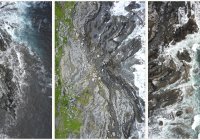
Researchers use drones to photograph seaweeds
Drones are the future for nature mapping and monitoring. – Compared to satellite pictures, drone images provide 1,000 times better image resolution and one million times more data points, says Kasper Hancke, marine biologist at NIVA.
News article
The long road from Arctic science to international law
The road to the Minamata Convention on mercury took almost 15 years and has been significantly influenced by Arctic research and Norwegian efforts. Why and in what way did Arctic research play such a significant role in this road towards the convention?
News article
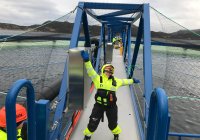
A sea lice free salmon prison
In October 2018, the first salmon were “imprisoned” in a brand new fish production prototype in Trøndelag, Norway. With a rigid steel construction and a water current generator included, the new fish cage Aquatraz will both prevent fish escapes and keep the fish in shape, while researchers from the Norwegian Institute for Water Research (NIVA) are monitoring the sea lice and water quality in the cage.
News article
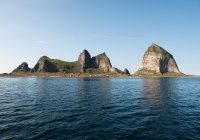
The Helgeland coast: worth its weight in gold
Nordic coastal ecosystems recently got a scientific health check. The Helgeland coast in Norway did well, according to Norwegian Institute for Water Research (NIVA).
News article
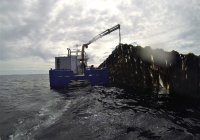
Researcher believes in kelp farming
By 2050, kelp farming along the Norwegian coast is estimated to cover an area corresponding to half the size of all farmed land in the country. The management agencies need to prepare.
News article
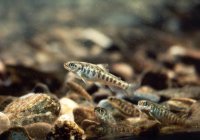
It is all in the genes: Decoding the effects of multiple stressors
Genomic markers are the key in a new approach for assessing the toxic effects arising from exposure to multiple stressors.
News article
Contamination of European seas continues despite some positive progress
A new European Environment Agency (EEA) report tells that between 75 and 96 % of the assessed area of Europe’s regional seas have a contamination problem.
News article
The Myanmar Norway bilateral Environmental Agreement proceeds to phase two
Myanmar has placed high priority on enhancing the protection of its biodiversity and habitats to conserve its natural heritage. However, ongoing deforestation and forests degradation have resulted in decreased forest cover, destruction of habitats and ecosystems, and loss of biodiversity. Norwegian institutions and Myanmar authorities are collaborating for improved environmental management. After four years, The Norwegian Institute for Water Research (NIVA) has been given the responsibility for coordinating the second phase of the program.
News article
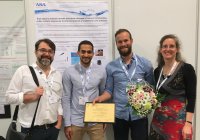
NIVA and Akvaplan-niva stand out at the SETAC meeting
The aim of the PEACE project is to get a big step closer to a more realistic way of studying the effect of contaminants on natural ecosystems. Last week, the project team presented key findings at the prestigious SETAC conference in Helsinki – and received the Best Platform Presentation Award.
News article
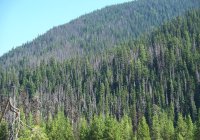
Destructive insect outbreaks and cod collapse: Why didn’t the management measures help?
When fundamental changes started to happen in three ecosystems in North America, people reacted: They completely stopped pollution, forestry and fishing. But the attempts were futile. It was impossible to bring the ecosystems back to their original state. Why didn’t the management efforts have any effect?
News article
Special Issue of Water: Ecosystem Functioning in Rivers and Riparian Zones
NIVA research manager Nikolai Friberg guest edits a Special Issue of Water, a peer-reviewed open access journal on water science and technology, including the ecology and management of water resources, and is published monthly online by MDPI. This special issue is now open for submission with deadline August 30 2020.
News article
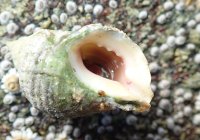
Pollutant-ban has made snails healthy again
The environmental pollutant TBT can mimic hormones to the extent that it sterilizes female snails and make them grow non-functional penises and vas deferens. But for the first time since monitoring started up in 1991 and the total ban of TBT entered force in 2008, only fertile dogwhelk have been found along the Norwegian coastline.

News article
Unpacking uncertainty in times of climate change
Climate change undoubtedly is one of the most significant development challenges of our times. Research over the last few decades has demonstrated clearly the links between anthropogenically induced emissions and climatic changes. Despite these scientific advancements, uncertainties persist at multiple scales; with respect to future societal emissions, predictions of accuracy, frequency and scale of climatic events, or possible feedback loops.
News article
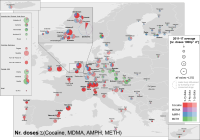
Mapping international drug use through wastewater-based epidemiology
The results of seven years’ wastewater analysis have been compiled in an article published in the prestigious journal Addiction. An international group of researchers, the SCORE group (Sewage analysis CORe group Europe), analysed the wastewater of more than 60 million people in 120 cities in 37 countries.

News article
Searching for Aurora on the Gakkel Ridge
Speaking of Aurora, most people will think of the Northern Lights, the spectacular celestial displays frequently seen in the Arctic. Scientists in the HACON-project travelled to the northernmost part of the world, searching for Aurora. But not the one in the sky: They were gazing into the vast depths of the Arctic Ocean to figure out what exotic creatures live in the cold waters close to the North Pole.
News article
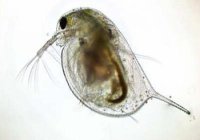
Silver and titanium nanomaterials present in wastewater have toxic effects on crustaceans and fish cells
New research shows that silver and titanium nanoparticles in present in treated wastewater may have toxic effects on algae, crustaceans and fish gill cells, and the effects seem to be species dependent.
News article
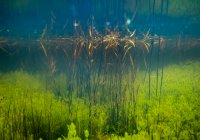
The global distribution of freshwater plants is controlled by catchment characteristics
Unlike land plants, photosynthesis in many aquatic plants relies on bicarbonate in addition to CO2 to compensate for the low availability of CO2 in water. A study in SCIENCE by Iversen and co-authors from among others NIVA shows that the abundance of plant species with the ability to use bicarbonate increases in hard water lakes with greater bicarbonate concentrations. In streams, where the CO2 concentration is higher than in air, bicarbonate users are few.
News article
EuroSea: Gathering more Knowledge for a sustainable Use of the Ocean
NIVA is contributing in a new EU-project that will provide new insight into making ocean observation more efficient.
News article
Norway to support ASEAN in combating marine plastic debris
The transport of plastics from sources on land via rivers to the world’s oceans is a global environmental challenge. The Association of Southeast Asian Nations, ASEAN, are building local capacity for reducing plastic pollution, and Norway has taken a leading role in supporting ASEAN’s endeavors in combating plastic pollution through a new program.